
Crown Ring RFQs: Scope the 316L Evidence
For a 316L crown ring RFQ, ask the supplier to identify which part of the offered ring its material statement covers and what document supports that statement. Link the answer to the exact listing, quotation and sample reference. Jiuzhen’s crown skull ring page lists “316L Stainless steel”; use that as the supplier’s declared grade, then request the evidence scope rather than treating a product photo as material verification.
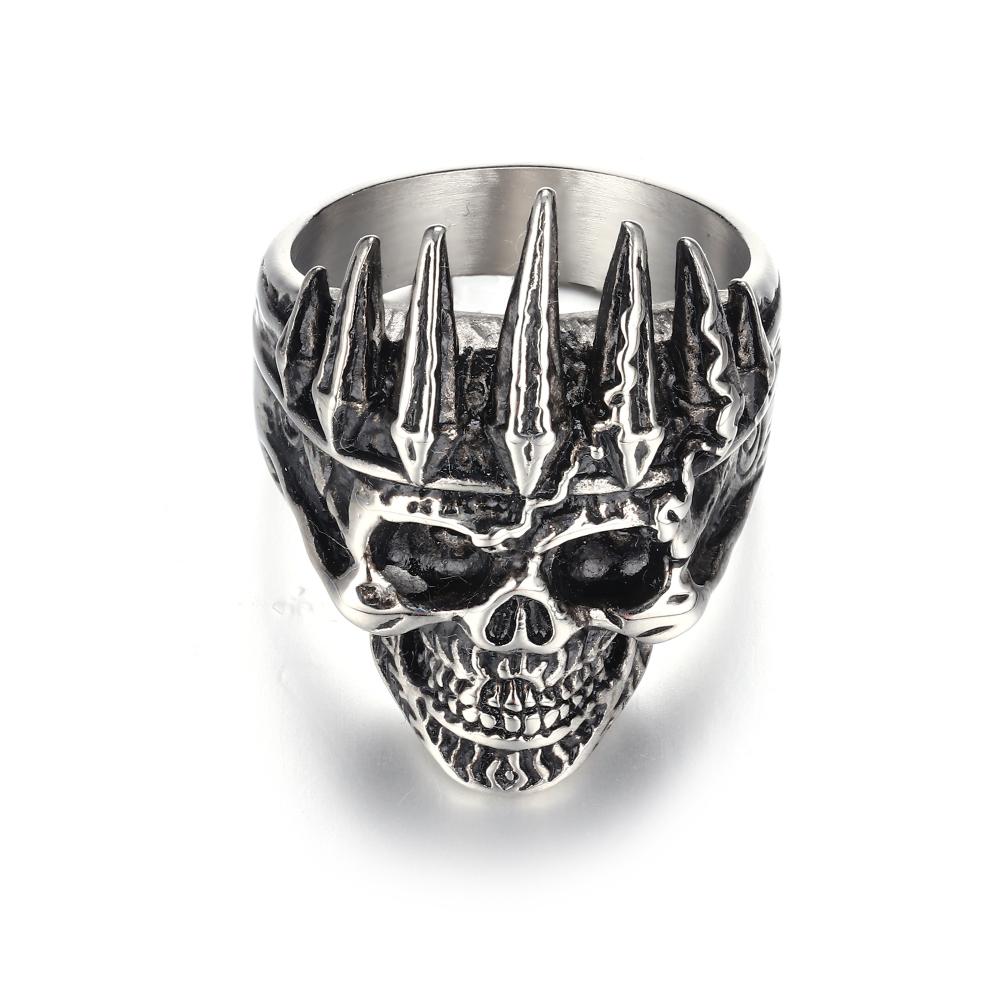
Official crown skull ring catalogue image, used to identify the offered design. Its metallic appearance does not verify the supplier’s declared steel grade.
Start with the listing’s actual material statement
The Nobility King Crown Stainless Steel Skull Ring listing names “316L Stainless steel” in its material field. That is a useful starting point for a purchasing enquiry. It gives the supplier a precise statement to confirm for the offered version, rather than leaving the discussion at the broader phrase stainless steel jewellery.
Save the URL and front design reference in the RFQ. Ask the supplier to repeat its declared material in the quotation and identify the item it applies to. A familiar skull design or a similar product name should not be the only link between a material response and the ring being purchased.
Define what the declaration covers
Ask whether the stated grade covers the complete offered ring or only an identified part. If the supplier describes separate parts, request its own part names and the material declared for each. Do not create a component breakdown from a photograph or assume that a single material line answers every construction question.
RFQ field
Response requested
Purchasing purpose
Offered item
Listing and quotation reference
Identify the selected crown ring
Material scope
Whole ring or named part
Locate the supplier’s declaration
Supporting document
Document title, issuer and reference
Understand the evidence supplied
Item relationship
Material, batch or sample link
Connect the record to the offer
If the response says the declaration covers the complete item, record that wording with the quotation revision. If its scope is narrower, retain the boundary instead of silently extending it to the entire product.
Official inner and back view from the same product listing. Use it to identify the area covered by a supplier’s material statement, without inferring construction or grade from the photograph.
Request the document and its identifying fields
Ask what supporting material document the supplier can provide. Request its title, issuing organisation or source, date, reference number and the material or item it identifies. These fields help the purchasing team understand the record before deciding whether it meets the buyer’s evidence requirement.
A document heading alone may leave the relationship unclear. Ask the supplier to explain any different product code, material description or reference appearing in the attachment. Keep the complete document together with that explanation so that a reviewer can follow the connection without relying on an informal filename.
Connect the material record to the offered item
A document may refer to source material, a production batch, a sample or a finished item. Ask the supplier which level its record covers and how it relates to this crown ring offer. Where a separate reference connects those records, request that reference in the written response.
The important purchasing question is whether the chain of references is understandable. If the attachment identifies material without identifying the offered ring, request the missing link. If it covers one sample, record that sample’s identity and the supplier’s stated relationship to the proposed order. Keep unresolved relationships visible during approval.
Official oblique catalogue view of the crown skull ring. Keep the design reference attached to the material enquiry; no performance or material-test result is shown.
Keep appearance approval separate from grade evidence
The official images provide front, inner and oblique design references. Use them when discussing which crown skull ring is offered and which visible area a response concerns. They also help prevent a material attachment for a different catalogue design from entering the quotation file unnoticed.
A photograph does not establish a steel grade, and the supplier’s material label does not by itself establish performance or suitability for a particular user. State the evidence boundary once in the approval brief. Keep appearance decisions and material-document decisions as separate fields, with the relevant reference beside each.
Make the evidence request proportionate to the purchase
Tell the supplier what information the buyer needs to assess the offer. If a particular document or evaluation is required by the buyer’s purchasing process, identify that requirement before quotation approval and ask whether it can be supplied for the selected item. Do not leave the required evidence level to an ambiguous request for a certificate.
Name the offered ring and quotation revision.
Record the supplier’s declared grade and its stated scope.
List the supporting documents actually received.
Identify missing item, batch or sample relationships.
Use that short checklist to return focused questions. For example, ask how the material reference in an attachment connects to the quoted ring, rather than requesting the same document again without explaining the gap.
Carry the references into a repeat quotation
For a repeat offer, ask the supplier to confirm the material declaration and supporting references that apply to the new quotation. Record any changed source, document or item reference in the revised file. A previous response remains useful context, but the current purchasing decision needs an identifiable connection to the current offer.
A practical enquiry reads: “Please confirm the 316L declaration for this crown skull ring, its component scope, and the supporting document’s relationship to the quoted item.” Send it through the supplier contact page. Use the jewellery articles for broader purchasing context while keeping this request tied to the actual product.
Frequently asked questions
Does the reviewed page identify the grade?
It lists “316L Stainless steel” as the supplier’s material statement. Ask the supplier to confirm its scope for the offered version and provide the supporting record.
What if the document refers only to material?
Request the supplier’s explanation of how that material reference connects to the crown ring quotation, production batch or identified sample.
Can an appearance sample close the material question?
Keep its appearance approval separate. Link the sample to the material declaration and evidence actually supplied, rather than inferring grade from its appearance.
Wholesale ringsMaterial declarationsSupplier documents