
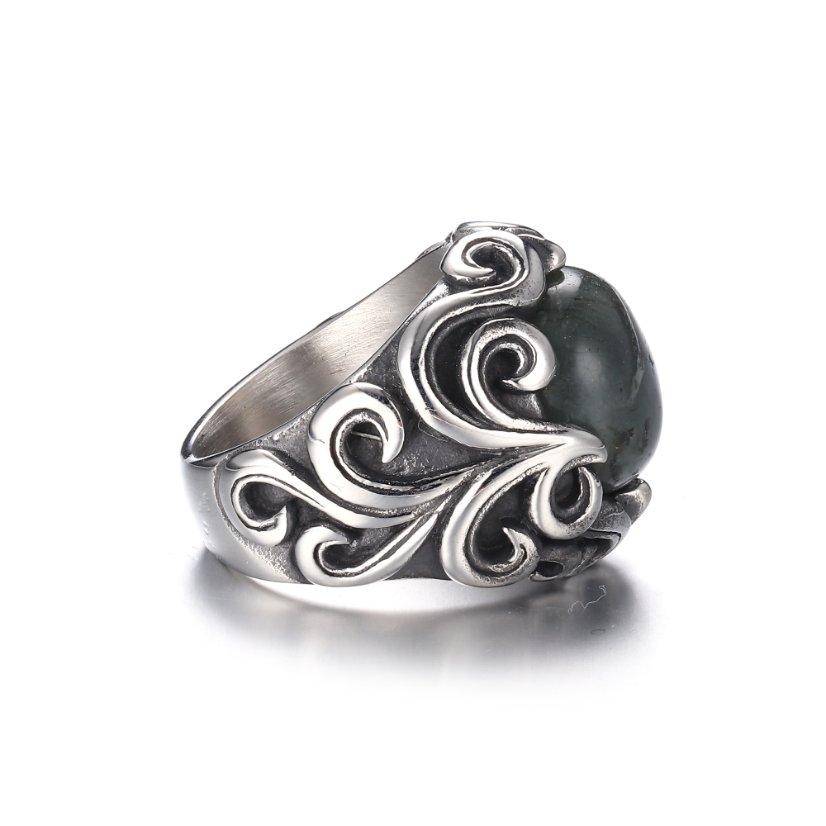
Insert Rings: Map the Setting Contact Regions
What should an insert-ring setting enquiry identify? Ask the supplier to map the actual insert, surrounding frame and the regions that support or retain it in the offered construction. Keep those functions distinguishable from purely decorative metalwork. A side photograph can locate visible features but does not establish a complete setting method, concealed support or attachment-strength result.
Distinct official side composition showing the insert and shaped frame. Visible proximity does not identify a complete retention method, material authenticity or tested strength.
Identify the actual Gothic insert-ring reference
The Gothic Moonstone Stainless Steel Ring listing gives an approximately 24.94 mm height and 25.5 g weight, with a stainless-steel and moonstone material description. Retain those supplier fields with the actual offer. The material name is not an independently verified gemstone identity or a setting specification.
For buyers sourcing wholesale rings, the official front, side and rear views provide a useful construction starting point. A domed-looking centre sits within surrounding shaped metal regions. The reviewed page does not identify which contacts have a retention function or provide a dimensioned section of the setting.
Separate the insert from decorative frame regions
Ask the supplier to mark the actual insert and distinguish surrounding regions by their intended function. Keep a complete-ring view with any returned detail. An ornamental curl that appears to meet the centre should not automatically be labelled a retaining claw or a structural support without the supplier’s response.
Use the supplier’s actual component terminology where provided. Buyer-added letters can support a discussion but should not become invented part codes. Keep the centre material declaration separate from the construction function of the surrounding metal so an identity answer does not substitute for a setting explanation.
Official whole-ring identification reference. The centre appearance and surrounding curls do not establish gemstone identity or each feature functional role.
Request the actual contact and support association
Ask which regions the supplier says contact, support or retain the insert and request the applicable marked view or drawing. Where a contact is concealed by the centre or frame, retain it as an unshown detail until an applicable reference addresses it. A rear band view alone does not provide the complete underside construction.
Do not assume an adhesive, press fit, bezel or another setting method from the outline. If the supplier confirms a method or component, retain the actual offered scope. This enquiry identifies manufacturer construction; it provides no instruction for tightening, removing, resetting or repairing an insert.
Use a setting-contact response worksheet
The worksheet requests an applicable supplier construction record. It is not a finished JZ setting drawing, a gemstone-authenticity statement or a passed retention assessment.
Buying field
Requested supplier response
Offered ring
Actual Gothic insert-ring version and selected catalogue reference.
Insert identity
Supplier-defined component reference, separate from unverified material claims.
Frame-region map
Marked complete view distinguishing decorative and functional regions.
Contact and support
Actual supplier explanation of the regions that support or retain the centre.
Concealed detail
Applicable section, underside or other construction reference where supplied.
Supporting record
Actual manufacturer document or assessment and the scope it covers.
Keep local geometry separate from overall height
If an insert or setting dimension matters, ask the supplier to mark its actual endpoints and units on an applicable reference. The listed overall ring height does not provide the insert diameter, a contact overlap or the thickness of a concealed support. Do not estimate those values from an unscaled image.
A returned local value should remain associated with its component and version. Do not invent a fit clearance, tolerance or acceptance threshold where the source gives none. Keep undefined measurement locations visible until the supplier explains what the value describes.
Official rear band reference. The view does not provide every concealed setting contact, a fitting clearance or a repair instruction.
Separate construction from retention evidence
If the supplier provides a retention assessment or other record, request its identity and the actual assembly it covers. Retain its stated sample, conditions and outcome within that scope. Do not turn a construction drawing or a firm-looking appearance into a passed strength or durability result.
The earlier centre-insert enquiry clarifies the material statement, and the care enquiry requests instructions for the complete ring. Neither supplies this setting-contact map. Likewise, the crown alloy question, snake finish reference and separate raven chain assembly concern different product records.
Retain the setting version in the current offer
If the supplier changes the insert form or surrounding frame, ask which contact references and manufacturer documents change. Preserve earlier information as history. A matching domed appearance or generic model name should not silently carry an old construction response into a revised setting.
Send the selected insert-ring link and worksheet through JZ contact. Keep unprovided contacts and supporting records open. This enquiry provides no repair procedure, verified gemstone origin, skin-contact claim, durability result or commercial commitment.
Buyer FAQ
Does a decorative curl automatically retain the insert?
Ask the supplier to distinguish decorative and functional regions on the actual construction.
Does the side view identify an adhesive or press fit?
The visible outline does not establish a concealed method; request the manufacturer reference.
Does overall ring height give insert dimensions?
Request local dimensions with defined endpoints and component scope.
Does a setting map prove retention strength?
Keep actual assessment evidence separate from construction identification.
Supplier response checklist
Actual product, version and component scope
Applicable supplier configuration or construction reference
Provided records and unprovided evidence retained separately
wholesale ringsB2B supplier sample record