
Snake Ring RFQs: Specify Recess Contrast
For wholesale rings with sculpted details, specify the contrast between raised bright surfaces and dark recessed areas using an identified sample and matching views. Jiuzhen Alt’s Power Snake ring gallery shows this contrasting appearance, while its text lists stainless steel without explaining the finishing process. Ask the supplier which treatment creates the offered appearance, mark the areas to compare, and agree viewing conditions and acceptance examples before checking an order.
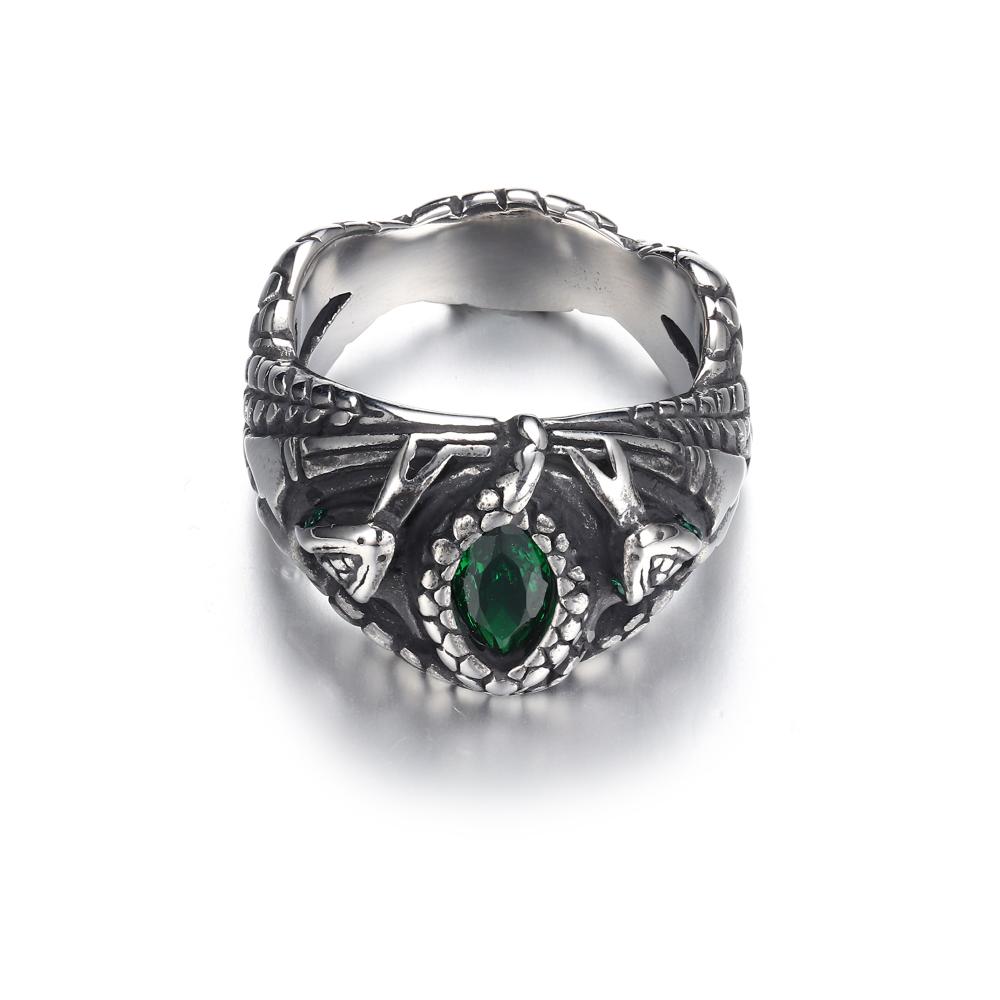
Official Power Snake catalogue front view. The visible bright and dark contrast is an appearance reference; the image does not establish the finishing process or the identity of green decorative elements.
Describe the visible contrast before naming a process
The Power Snake Stainless Steel Beast Ring listing provides an approximate height of 18mm, an approximate weight of 16g, and stainless steel as its material. Its gallery also shows bright raised features beside dark recesses. That visual relationship is a useful starting point for an appearance specification, even though the text does not explain how it is produced.
Begin the enquiry with neutral descriptions such as “bright raised scale surfaces” and “dark recessed areas.” Ask the supplier to identify the treatment used on the offered version. This lets the buyer discuss the desired appearance without accidentally specifying a manufacturing process that the supplier has not confirmed.
Map the areas that determine the design’s appearance
A sculpted ring has several surfaces facing different directions. Select a front view and side views that show the relevant details, then mark the areas to compare. Focus on the transition from the tops of raised details into the recesses, and on whether the same approach is intended around the design.
Area
Question for the supplier
Approval reference
Raised sculpted surfaces
Which areas should have the bright appearance?
Marked views and an identified physical sample
Recessed areas
Where should the darker treatment remain visible?
Examples showing the intended dark-area coverage
Transitions
What variation is acceptable at the boundaries?
Agreed acceptable and unacceptable examples
Other components
Which features are outside this finish comparison?
Separate component questions where needed
Keep the marked reference connected to the actual product code. A similarly styled ring can have a different relief pattern, so its bright and dark areas may not be a useful substitute for the selected snake design.
Side reference from the same official listing, showing raised sculpted details beside darker recessed areas. Supplier process information and the approved physical sample remain separate evidence.
Use a physical sample to agree the appearance
Request a sample of the version being quoted and ask the supplier to identify it with a sample code. Examine the front and sides against the marked reference. Record which areas match the intended appearance and which need clarification. This gives the supplier a specific question rather than a general instruction to make the ring look “more vintage.”
If a range of appearance is acceptable, ask for representative examples of that range. The buyer and supplier can then distinguish an approved darker variation from an unintended patch or a lost detail. Keep these examples attached to the approval decision so they remain available when an order is checked later.
Keep viewing conditions consistent
Bright metal-like surfaces reflect their surroundings, and recessed areas can look different as a ring is turned. Choose a practical viewing setup for sample comparison and use the same approach for receiving checks. Record the lighting arrangement, background, viewing distance, and the views required to show the relevant areas.
For photographic records, keep the whole ring identifiable and include close views of the issue being discussed. Avoid changing image filters or making a local edit that hides a surface difference. If photographs lead to different interpretations, compare the identified physical samples before approving a new appearance limit.
Opposite-side catalogue reference for comparing the pictured surface treatment across the sculpted design. No numerical contrast tolerance or durability result is inferred from the photograph.
Request process information separately from approval
Ask the supplier what creates the bright and dark areas and whether different surfaces receive different treatments. Request any product-specific care or handling instructions associated with that finish. Keep the reply beside the appearance record, rather than treating a catalogue photograph as a process description.
Appearance approval also does not establish how the finish performs in use. If the purchase requires a durability check, define that as a separate requirement with an agreed method and acceptance criteria. Do not turn a successful visual comparison into an unrequested wear-resistance claim, and do not use an improvised cleaning test to identify an unknown surface treatment.
Make a receiving discrepancy easy to resolve
At receiving, use the agreed sample and marked views to locate the affected area. Record the item reference, the observed difference, and its position. A note such as “dark area extends onto the marked raised surface” gives the supplier more useful information than “finish looks wrong.”
Identify the ring and the approved finish-reference version.
Photograph the complete item and the particular surface difference.
Compare it with the agreed appearance examples under the same setup.
Request a response against the relevant approval point before deciding the disposition.
Send the marked references and sample questions through the supplier contact page. Keep size and delivered-assembly enquiries on their own specification lines. The accessories blog is another route for catalogue context, while the quoted ring and approved sample define this appearance task.
Frequently asked questions
Are the dark recesses an oxidised finish?
The reviewed page does not identify the process. Ask the supplier to describe the treatment used on the quoted version rather than assigning a process from colour alone.
Should every recess look identical?
Agree the acceptable appearance range using identified samples and marked areas. The catalogue does not state a numerical limit for uniformity.
Does a visual pass prove durability?
It records conformity to the agreed appearance reference. Any required durability evaluation needs its own method, scope, and acceptance criteria.
Wholesale ringsSnake ring finishAppearance samples