Crown Ring Orders: Map Units by Size
How should a wholesale Crown Ring order show its size mix? First obtain the supplier-confirmed offered finger-fit sizes and their size system. Allocate the requested commercial units to each confirmed size, then connect those lines to the quotation and any applicable sample or packing reference. A total ring quantity leaves the distribution unresolved when more than one size is proposed.
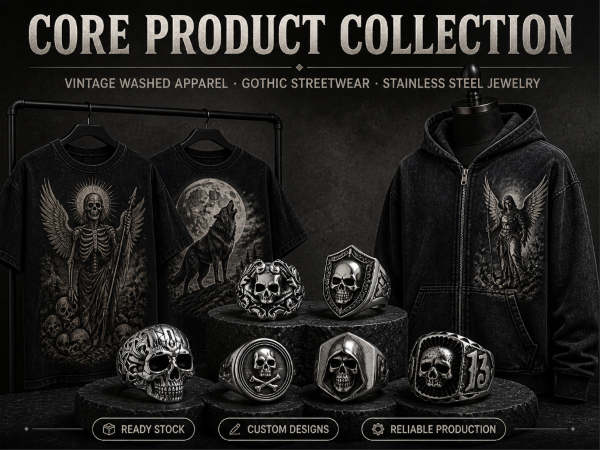
Mixed gothic category display. Advertising, stock and design-service statements are not independent verification; depicted rings are not the offered Crown Ring size list or an agreed set.
Identify the actual Crown Ring before allocating units
Jiuzhen Alt lists the Nobility King Crown Stainless Steel Skull Ring. Its catalogue gives an approximate height of 33.5 mm and an approximate weight of 30 g. Those fields identify aspects of the listed item; they do not supply an offered finger-fit size schedule. Ask which size references the supplier actually offers for the particular ring version in your enquiry.
Record the product reference with the response. Keep the sculpted design and any supplier version identifier attached to the size schedule so that an answer for another ring cannot enter the order by mistake. Category collections may show several ring appearances, but the commercial allocation must identify the actual Crown Ring being quoted.
Retain the supplier size codes and their meaning
Ask the supplier to name the system used for the offered finger-fit sizes and explain any internal size codes. Keep both the original code and its declared meaning in the purchasing record. Do not rename a code using an assumed international conversion. If the buyer needs a different system, request the applicable supplier mapping and leave it unresolved until that response is available.
This step establishes the available ordering references, rather than prescribing physical measurements or a particular size range. Keep an unconfirmed size outside the confirmed allocation table. The supplier may answer that a requested option is not offered or needs further discussion; record that answer instead of treating a requested size as accepted supply.
Buying field
Requested supplier response
Product reference
Actual Nobility King Crown ring and the supplier version being quoted.
Offered size
Supplier-confirmed finger-fit size code and its stated size system.
Quoted unit
What one commercial unit represents on that quotation line.
Requested allocation
Buyer-requested units against each identified offered size.
Supplier response
Confirmed allocation or an explicit unanswered or unavailable line.
Sample link
Any identified sample and the size line it represents.
Pack link
Applicable packing line if a size assortment is actually offered.
Order version
The agreed schedule, quotation reference and outstanding questions.
Allocate quantities against a clearly defined unit
State what is being counted before filling the quantity column. Ask the supplier whether the quotation unit refers to an individual ring or another declared selling unit. Retain the response beside the size code. A buyer quantity and a supplier pack quantity can describe different things, even when both appear in the same conversation.
Give each offered size its own allocation line, or use another supplier schedule that keeps the same information explicit. Enter the quantities the buyer actually requests; this guide supplies no default assortment or size ratio. Keep the requested distribution separate from the supplier-confirmed distribution until the commercial response establishes what is accepted.
Separate gothic collection illustration with clothing and metal accessories. It does not verify facility ownership, actual production methods, materials, the selected ring or pendant configuration or a supplied chain.
Ask whether the proposed size mix is offered
If the enquiry includes several sizes, ask whether the supplier offers that combination within the proposed order and how it would be quoted. A list of sizes alone does not establish a mixed-size service. Keep any supplier condition tied to the actual offer without inventing a minimum quantity, stock position or packing arrangement.
Where a proposal is offered only as separate size lines, retain that structure. Where the supplier confirms an assortment, ask it to identify the units per size within that assortment. Keep the commercial meaning clear so that a quantity referring to an assortment is not later read as the same number of individual rings.
Reconcile the allocation with the quotation total
Compare the allocation schedule with the quotation using the confirmed commercial unit. Where every line counts individual rings, the allocated quantities should reconcile with the stated ring total. Where different units are used, request the applicable conversion from the supplier before comparing totals. Do not silently combine unlike units.
Check for repeated size codes, omitted lines and a response that confirms only the overall quantity. These are document questions that can be resolved before the order is accepted. Keep a requested but unconfirmed line visible and ask whether it belongs in the final offer. A matching total by itself cannot establish that the intended distribution was quoted.
Actual Nobility King Crown ring reference. The catalogue height is not a finger-fit size or an offered size schedule; confirm each supplied size reference and quoted quantity.
Link samples and packing references to the same lines
If a sample is supplied, identify which offered size and ring version it represents. One sample can provide a reference for that identified item without confirming every proposed size allocation. Keep any separate discussion of fit, material or sculpted details associated with its own approval scope rather than treating the sample as confirmation of the entire commercial schedule.
Where a packing proposal accompanies an accepted assortment, ask how its size quantities correspond to the order lines. Use the actual supplier packing reference if supplied. This is a traceability question about the proposed order; it does not assume that a particular label, compartment, package or mixed-size arrangement is included.
Preserve an agreed allocation when the offer changes
A useful enquiry asks the supplier to confirm its offered Crown Ring size codes and system, identify the quotation unit, and respond to the requested units per size. It can also ask the supplier to identify any applicable sample and assortment-packing reference. Keep missing answers explicit so that purchasing knows which part of the order remains open.
When a quantity or offered size changes, retain the earlier schedule and give the revised version a clear identity. Ask the supplier to confirm the applicable quotation and any related packing change. This gives purchasing and receiving one current distribution to follow, while preserving the history needed to understand an earlier proposal.
Confirm the actual ring and offered size codes.
Define the quotation unit.
Allocate and confirm units per size.
Reconcile the schedule and retain its agreed version.
Buyer FAQ
Is 33.5 mm the offered finger-fit size?
The catalogue identifies it as height. Request the actual offered finger-fit size references separately.
Does this guide specify a suitable size ratio?
No. Enter the actual buyer request and obtain the supplier response for each proposed size.
Does a size list prove mixed-size supply is available?
Ask the supplier whether the proposed combination is offered and how its commercial units are quoted.
What if only the total quantity is confirmed?
Ask for the units per size and keep the distribution open until it is confirmed.
Can one sample confirm the complete order mix?
Identify the size and product version the sample represents. Commercial allocation needs its own explicit schedule.
Begin with the actual Crown Ring product reference. Use the jewelry purchasing blog for related specification questions, or contact Jiuzhen Alt with your requested size allocation.
wholesale crown ring size unit allocationB2B supplier sample record